The following words are taken from an interview with The Hydro Chronicle Magazine. I get asked to do interviews quite a lot, but honestly, after a while the questions get a bit formulaic, predictable, even if still perfectly valid. These questions felt a bit deeper than the surface level stuff I’m used to, so I really made an effort to answer them and give them the respect they deserved. Ultimately I think it led to the most in depth interview I’ve ever given. The original interview went out as a hard copy full cover magazine across the UK, but because I feel it’s such a good reflection of where I’m at and there’s no online presence for it, I thought I’d post it online here too.
Interview with Void One: Pioneering Graffiti in the Digital and Physical Realms
Void One has become synonymous with innovation in the graffiti art community, notably transforming Birmingham’s urban landscape through his dynamic, three-dimensional street murals, cutting-edge augmented reality experiences, and fine art-inspired canvases. His ability to blend traditional graffiti aesthetics with contemporary digital technology has positioned him uniquely within the artistic world, offering viewers immersive experiences that challenge conventional perceptions of graffiti.
Void One’s creations transcend traditional boundaries, extending from walls onto canvases that evoke the detail, depth, and emotion of fine art. His incorporation of augmented reality, and 3D printing technologies opens new dimensions, not only physically but experientially, providing audiences with unprecedented ways to engage with urban art. Through his groundbreaking projects, Void One exemplifies how innovation and tradition can harmoniously coexist, reshaping what graffiti art can be in the 21st century.
THC – Could you share your journey into graffiti and what initially drew you to street art?
VOID – I remember seeing it around and being interested from pretty young, probably from the age of about 6. There was a hall of fame next to the library I went to as a kid and my mom used to take me there so I’ve always noticed it around, wondered who the people that did it were and what the story was.
It wasn’t until I was in my early teens that I started to pay more attention. We used to break into old warehouses and walk the train line from Sutton to Erdington instead of going to school and there was always graff around. We went down a sewer really far underground once and it opened up into this cavern of graff and huge sewer pipes like a scene out of batman or something, like there was a whole world going on beneath us that no one got to see. I’ll never forget it. I did a few tags and stuff in my early teens but it wasn’t til about 99/2000 I started writing with any degree of regularity.
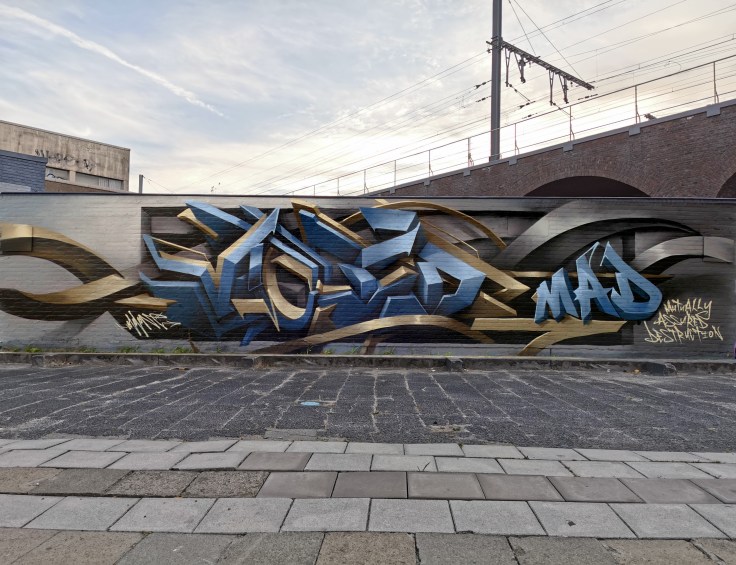
We’d moved to Leicester but I was still traveling back to Brum to see my mates so catching a lot of trains and seeing all the tracksides and reading zines got me hooked. I didn’t really know anyone in Leicester and I was a pretty frustrated kid so I used to just go out painting on my own to get away from it all and shut my brain up for a bit. That’s where I did all my first throwies and pieces as Void. I should shout my bro’s Jade One & Lime at this point. We used to go skating together in Brum, both into graff and they were a big influence early on. It just felt like part of a broader culture though, same as we all used to DJ and produce, you can’t just be into one part of it, and I’m not a spectator, so I had to get up.
THC – What inspired you to experiment with three-dimensional techniques in your murals?
VOID – I’ve always liked technical drawing and used Photoshop since 95 so digital art / graphic design has always interested me. I got into music for 15 years running labels and system teching for events like Atomic Jam, Flashback, Innovation & Raveology and sound engineering for bands like The Haggis Horns, Steel Pulse & Dawn Penn. I was busy making music and putting on shows but I needed covers for my releases so I continued to do graphic design work and I began to develop a certain style as a result. I’d still been sketching but it was just doodles for the most part, but there came a point about ten years ago where I had a few characters and I just felt hungry to paint again. Characters are cool and all but I had to do letters, no question. Characters go next to letters, so in the end I just decided to do both.
I’d never been any good even if I had been active as a youth and I guess I just felt like I had unfinished business. I wanted to paint like all those dope productions I saw in Graphotism, and it was always going to be 3D. I love cyberpunk and dystopian, post-apocalyptic futurism. 3D just works with that graphic design / concept art, techy and minimal taste I’d developed through music, like all the 90’s techno and DnB covers back in the day. 3D brings realism to graff with lighting, glows and shadows that’s just more fun to fuck around with personally.
THC – How does creating artwork on canvas differ from your large-scale wall projects?
VOID – I don’t work on traditional canvas in the studio. I use ply or MDF wood panels depending on what effect I want so I can almost burnish the paint into the wood. This way I can be a bit rougher working the paint, it’s easier to remove mistakes & it’s way more fun than filling in flat colours. I’m a professional finger painter essentially. I apply paint with acrylic pens but work the shapes by hand. I accidentally smudged a piece once and realised that’s how you get good fades. That happy little accident became an entire style.
I like painting in the street or live because there’s a limit to what can be achieved in the time, you have to make decisions on the fly and there’s more flow to the pieces. You can be a bit more expressive with the paint when things are at scale and I find they often take the same time to produce as the smaller pieces in the end, it’s just way more physical. I like being in the studio able to leave work out and come back to it too though, or working on a few things simultaneously. I can get fatigued just looking at one thing all the time so it’s nice to be able to mix it up like that.
THC – What motivated your transition from traditional graffiti methods into integrating AR?
VOID – It’s a natural progression really. I have a lot of experience in so many industries I just wanted to experiment, I knew it would suit my work. I learned a long time ago that if you pick up one skill, all of the things you’ve learned are easily transferable to other disciplines, that you can adapt to new software, environments, mixing desks, or whatever else easier because you have a broader understanding of how technology and systems work, and this gives you options creatively. It helps connect dots other people might not have seen.
What I’m doing now with AR feels like the coalescence of a lifetime’s work. I did a year of Artificial Intelligence and Computer science at university so I have a grasp of the tech. I have two hard drives full of my own music, SFX and art resources. I know how to animate, I’ve now learned 3D modelling. I just knew if I threw it all together I’d have something a bit different to what other people were currently doing with the technology. It’s taken a lot of time away from painting and that’s been frustrating at times, but I’m now building the foundations of my own custom app to deliver my AR concepts and that’s just the way it is.
I’ve had problems with censorship and bandwidth limitations in the past using commercially available software so I’ve just had to find my own path with it. It’s not the 80’s anymore and it feels to me like there’s other kinds of real estate to claim now. I have the utmost respect for the history and the OG’s that wrote it, but I’ve always had my mind focused 50 years in the future, not the past.
THC – Could you describe the creative process behind your AR installations?
VOID – For anyone who doesn’t understand what augmented reality is, I have a program that uses ai to recognise image ‘triggers’. Once an image is recognised the program overlays 3D models, 2D images, animation and sounds onto the real world viewed through a smartphone, device or glasses.
As for the process, like most things it’s all about layers. Make a piece, strip it into layers & create depth by positioning each part of the image at a different distance to the wall or whatever, and in some cases animate the layers.
Well, that’s what everyone else is doing, but that’s kind of basic and boring. This is why it became important for my work to be interactive. If I’m going to spend all that time basically remaking the entire piece again it needs to be worth the investment and really add something. I don’t want you to just passively view the piece, I want you to be part of an experience. I said before, there’s no spectators here.

This means that part of my process is heavy on testing and experimentation. I have to build my prototypes and then go test them in the real world like a MAD scientist or something. Through that process over the last few years I’ve developed a system of tricks I know are effective and it’s just about refining them now and putting it all together as a body of work.
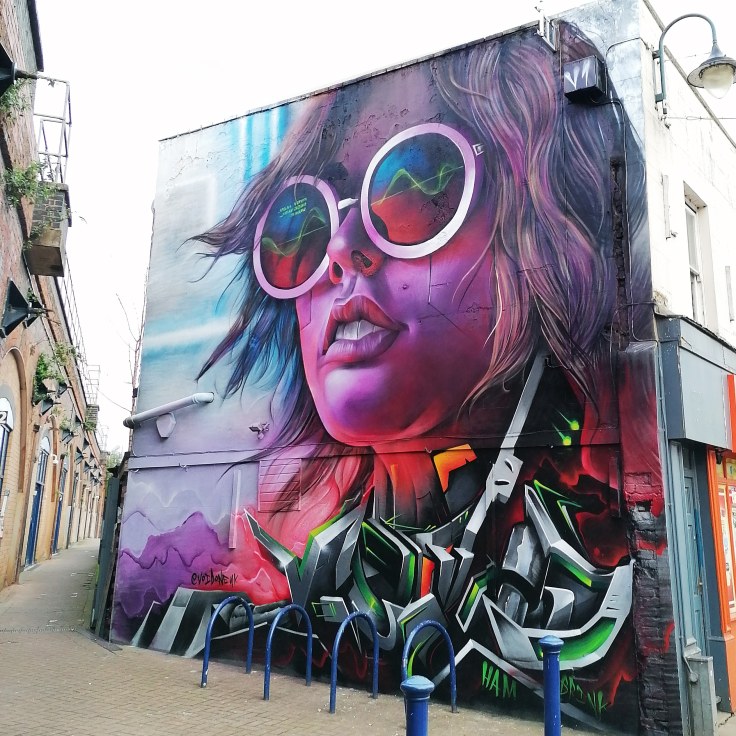
Each piece has a system of controls like a computer game, special moves if you know the hidden button combos. For one painting I set up a screen tap that made information play like a GUI inside some sunglasses, a tap and hold would write my tag with spray can sound effects, and there were music controls to play and stop one of my tunes with a sound reactive graphic equaliser playing in the glasses in real time. So more than just being interactive, objects within the scene react to each other when triggered too.
THC – How do audiences typically respond to experiencing graffiti art in virtual spaces?
VOID – I think whilst the technology has been around for a while it’s still very new and people are a bit unsure about it, people tend to be dismissive of new technology they don’t understand, but once they see what’s up people think it’s crazy. That’s part of the reason I started out using META’s AR software to integrate with Instagram because it meant most people had the app working on their phones already. It was familiar, so that made it a lot more accessible when I was handing out the stickers and stuff. People wanted to see it on their own device and make it work when they got home, it had to be super easy to operate. Whilst I’m now moving in a different direction, that experience was invaluable. All lessons I’ll be taking into my own development moving forward.
More broadly, the response has been great though. This was the stuff of science fiction films 20 years ago and it’s here. Now. It’s a bit of a frontier at the moment but I’m telling you in 20 years AR will be everywhere.
THC – How important is location and context in the placement of your three-dimensional graffiti pieces?
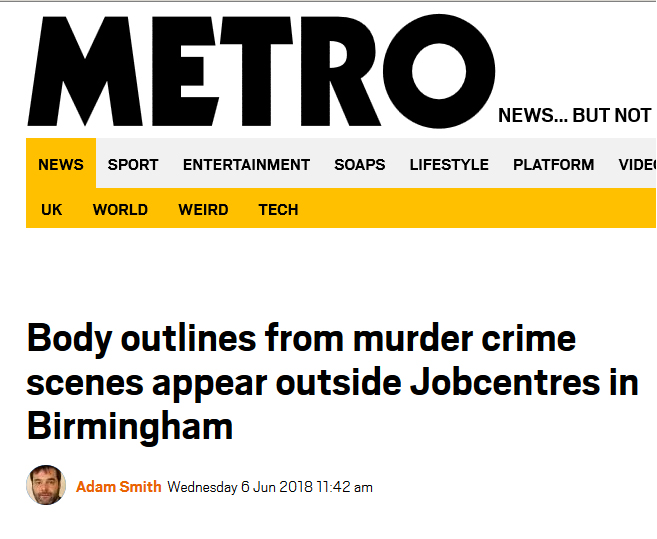
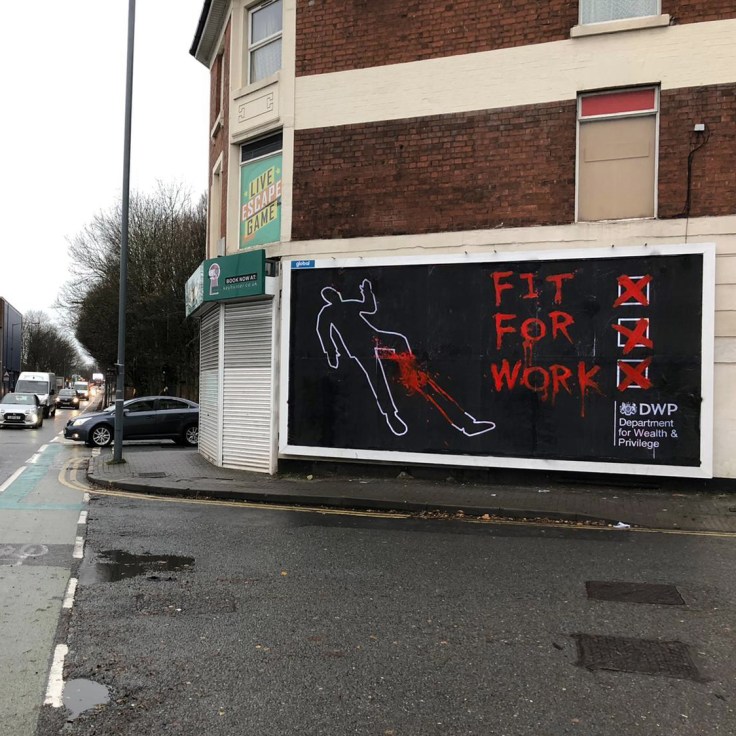
VOID – It depends on the project but the location always frames the piece in a unique way, or else it’s hot and gets a bit of respect. For the more political stuff it’s key to the message, like when I painted murder scene outlines on job centers, or blagged a giant white poppy into the tower poppies exhibition. It had to be on site else it wouldn’t have worked. The location was the piece.
It has increasingly become something to consider though. The lighting directions and temperatures need to match roughly for the effects to work when I’m using 3D models with AR. If the lighting is wrong and out of context with the real world environment it just looks like a cheap 80’s CGI and ruins the effect. Now I’m running on a games engine [Unity] it’s become a lot easier to manage simply because there’s so many more tools than I had available before.
THC – Who or what has influenced your artistic style the most?
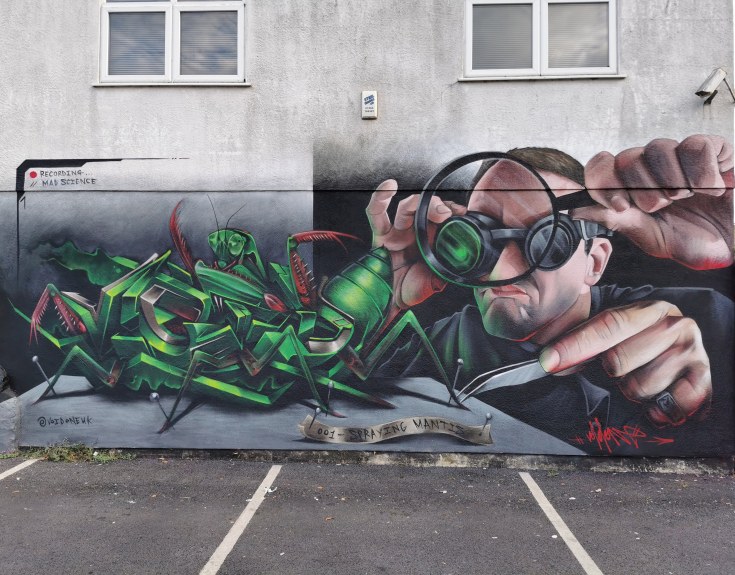
VOID – Graff wise? Daim gets the majority of credit for pushing me in this direction as he had the first 3D that stood out to me in the early 2000’s. I’d seen other 3D stuff but it all looked the same for the most part. Daim came at it with a graphic design style that I liked and wanted to develop myself so it just always resonated. Edmun, Mesin, Rate & Totem stick out off the top of my head as pushing the boundaries.
It probably sounds a bit cliche, but I love the masters, Escher, Da Vinci, Michelangelo, Vermeer, but not just because they were great artists or for the work that was produced, it’s about that spirit of invention and inquisitiveness. What made them great in my opinion was their ability to cross disciplines, to work at a high level in many fields. They were scientists, chemists, mathematicians, engineers, philosophers, and so much more. I mentioned this earlier because it’s become an integral part of how I try to approach things.
THC – What message or emotions do you strive to communicate through your fine-art graffiti canvases?
VOID – I’ve always been political, I guess. Hard not to be political after being dragged up through battered women’s hostels in Handsworth in the 80’s, or any one of the estates we lived on in Brum. Seeing the systemic failures that deprive generations of people their dignity, the poverty that gets weaponised to stoke xenophobia. State violence is ok but if you swear at the people inflicting it you’re a vulgar pleb and automatically lose the argument.
My name became Void because I felt like writing it was a dirty protest or something. Whatever I wrote it on was VOID, so what I wrote it on had to make sense. It just evolved from that to incorporate more figurative and allegorical work that satirises western imperial myths about democracy and liberty. A lot of my concepts are anti war, and I like to play with a vision of a post apocalyptic future it feels at times like we’re inescapably destined for. Maybe it’s a warning. That’s why I paint things like doves as suicide bombers, the virgin Mary holding a missile lovingly like the baby Jesus, or babies gestating in grenades.
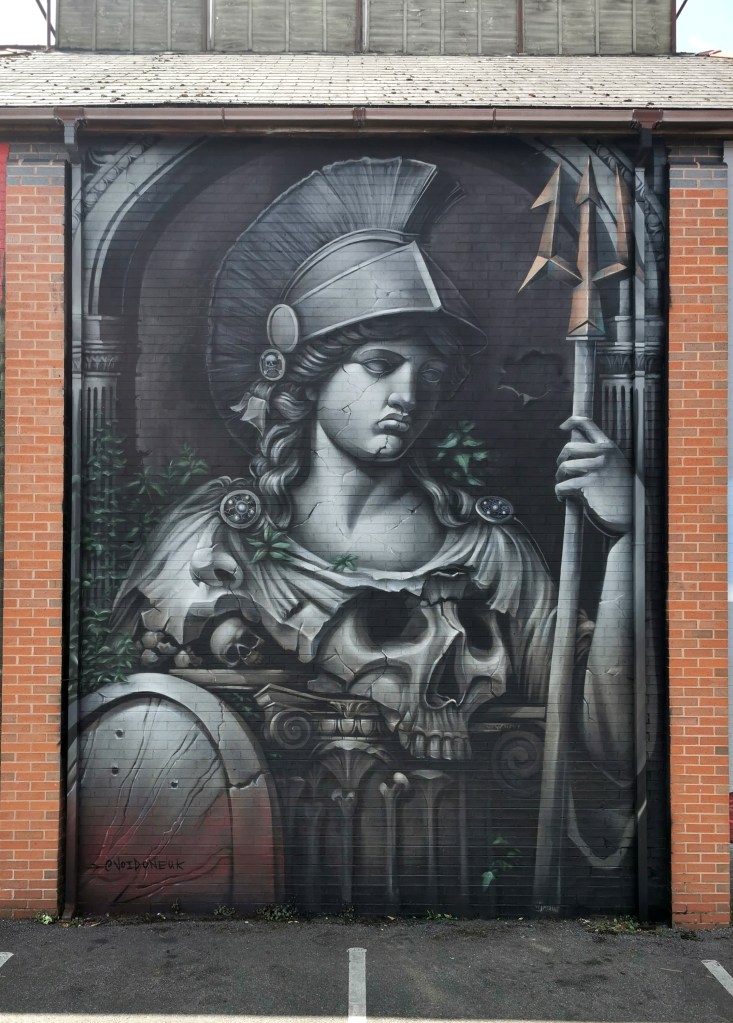
“I like that my paintings have a fine art feel, but they’re meant to be raw, confrontational and unapologetic. They’re my front line.”
I learned a long time ago that you can get away with more in a cartoon than you ever can in film or any other medium, now it’s just about how far I can push the envelope. That’s also why I prefer a more illustrative style over straight realism.
With more general work I do I feel like it’s too easy to just paint a beautiful face and everyone will love it, a few colourful flowers, it’s just not me so when I approach characters I tend to paint them like they’re not modelling but are models. A model number, a machine. A synthetic whose body is modified and commodified. Add neons, or lasers instead of flowers. There’s always a deeper meaning or backstory, but I try not to be too prescriptive, it just helps me develop ideas if there’s a bit of narrative.
More than anything the reason I do political work is because I think paintings are powerful, you can’t argue with a painting, there’s no shouting. Agree or disagree with it, you still have to process and confront it, it’s a much more personal process of introspection, and I think that’s powerful in challenging some of people’s most deeply held convictions, especially where traditional debate has broken down and people have become entrenched or polarised in their views. Especially poignant today. A picture paints a thousand words, after all.
THC – Can you talk about the most significant challenges you’ve encountered in merging digital technologies with street art?
VOID – I’d say there’s been two major things. Firstly, censorship as I mentioned earlier. Using other people’s software means other people’s terms and conditions. I ran my first AR project for the Stop Killer Robots Campaign in partnership with Amnesty that was seeking legislation at the UN against AI robots and drones that can make kill decisions independently of Humans, terminators basically. I made an AR walker mech that fired and made sound effects when you tap the screen so the Human effectively had to make the kill decision, but META decided the work was “Shocking, sensational, disrespectful, violent and depicting guns” so it got taken down and I had to completely rebuild the entire project elsewhere. Still my best review though, five stars!
The second was again a META problem. They decided to kill all third party AR on their platforms just as I was beginning to really make some progress. I’m pretty sure it was a land grab of all the programming but who knows what the real reason was. All my work was suddenly irrelevant and it was a bitter pill to swallow given I felt I was doing some pretty original work, but it had given me a really good insight into the technology and I knew I wasn’t done. Finding a platform that can do what I want has been impossible since, so it’s led me to the inevitable conclusion that I can only develop this myself. I’m an old punk though, everything is DIY.
THC – Which project has been your most ambitious to date, and why?
VOID – You might have heard me mention an app somewhere here!? That’s all supplementary work to an interactive 3D graffiti pop up book that I’m working on. I’ve custom modelled a 3D Void One spray can supported by a whole bunch of 3D animation that will feature as a moving image comic. It features a dream-like interpretation of Birmingham and a bunch of buildings and memories from my past that get attacked by giant arrow asteroids and everything basically gets blown up. Parts of the animation will pop out of the book as interactive 3D models and you’ll be able to fully explore and interact with the can, amongst a few other tricks but I really can’t give the game away too much yet!
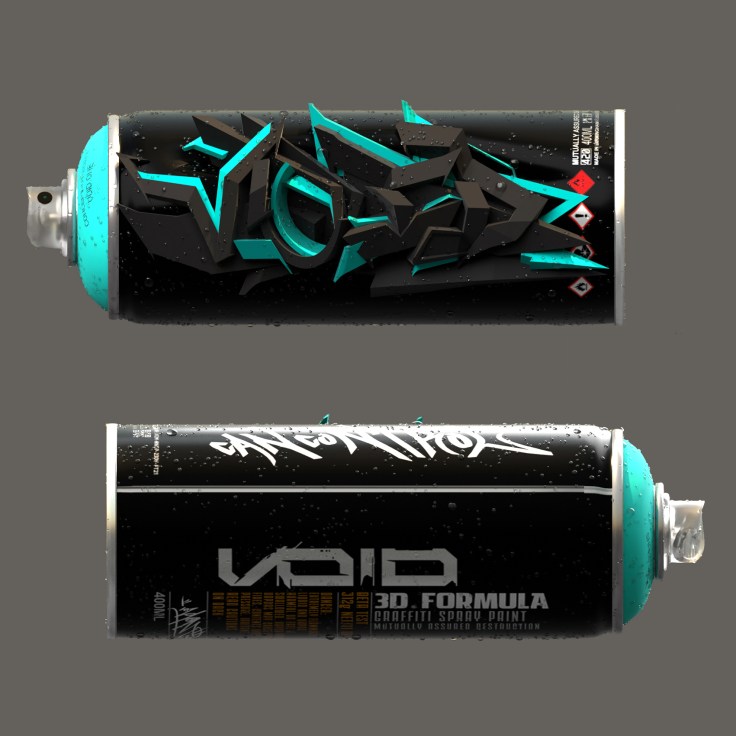
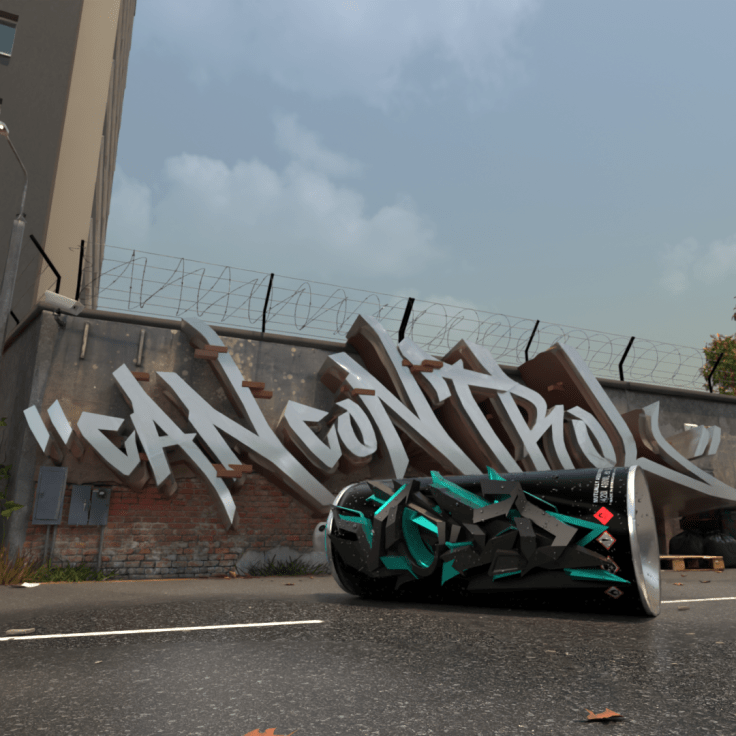
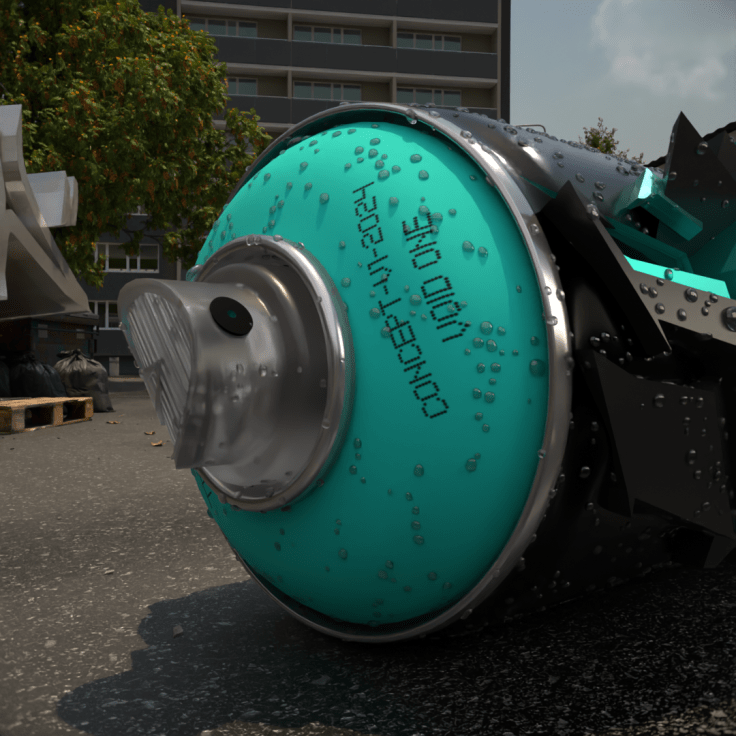
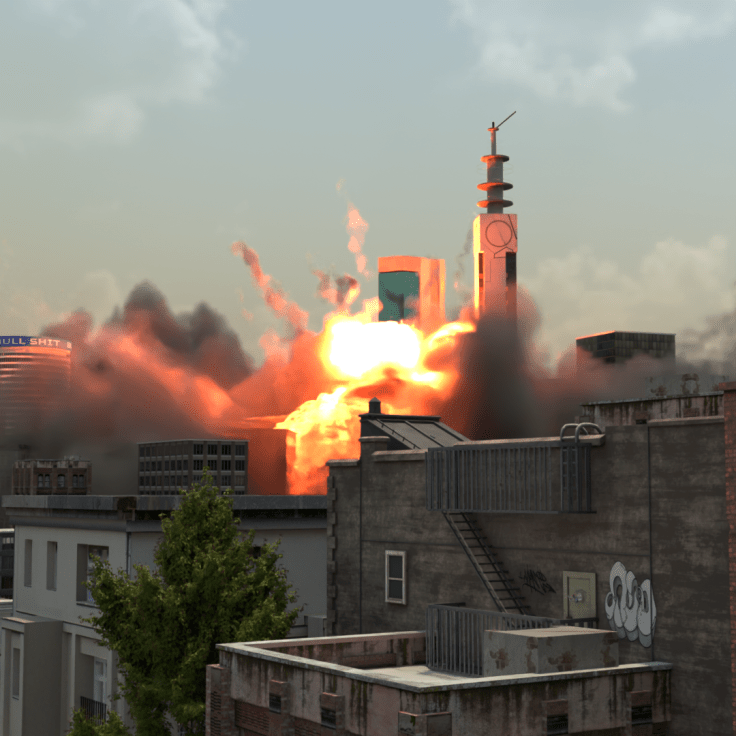
I hope to publish at some point by the end of next year, but this book has now become a prototype for something entirely different. I’m working as an NHS Clinical Entrepreneur affiliated to Anglia Ruskin University about to start working with clinicians to develop AR innovations for application within the NHS, educational institutions & creating sensory environments. It’s also my pathway to a PhD, and I’m determined to become Dr Void one day! Everything I’ve mentioned here has become my life’s work. Just mad people are throwing grants at me to make a graffiti book for the NHS essentially, but life’s weird like that sometimes so I’ll just see where it takes me.
THC – How do you balance innovation with respecting graffiti’s traditional roots?
VOID – I hear a lot of conversation around the use of VR to paint at the moment and I find that interesting. I’ve seen it used to outline walls and stuff lately and saw it for the first time live at MOS Belgium. I think this is going to be a much more provocative topic as technology evolves cause there’s a lot of purists. For me, I am 100% firmly based in the real world, real walls. I’m addicted to it and I just don’t believe there’s a comparison to be found with it personally. It’s like a kid spending hours learning guitar hero instead of an actual guitar. It feels pointless to me, but if it empowers other people to do their thing, or get a job done a bit quicker then who am I to say anything?
Interactivity is arguably what has made my work stand out. I made what is probably the world’s first sound reactive hoodie that played my tag as a graphic equalizer bouncing off your chest reacting to sound in the wearer’s local environment.
For me, tricks like this enhance the experience. I made my 2D tag 4D sound reactive but it’s still just my tag. The most basic of forms I’ve written countless thousands of times turned into something entirely different.
If anything it’s about making graff accessible to audiences in new ways, to bring paintings and visuals to life whilst providing opportunities to interact with and control objects in the piece like a computer game, with easter eggs. I want to take control of the environment around the piece, but I heard you’re only as fresh as your last wall and I’ll never lose sight of that.
THC – Do you consider yourself a graffiti artist, digital innovator, or something else entirely?
VOID – Like I said, I’m a professional smudger or finger painter! Honestly, I don’t place too much emphasis on labels because I do too many things to fit into one neat little box. Everyone has this inane desire to compartmentalise everything and it just doesn’t work for me like that the lines are too blurred. I come from a graffiti and graphic design background and that will always be central to what I do. I like to think I’m developing enough of my own style that it stands alone, and I challenge anyone who dares to stand against me! Muahahaha. I’ll leave it for all the armchair academics to debate what I am, I’m too busy.
THC – How has your approach evolved from your early days of graffiti to your current technological explorations?
VOID – I didn’t have a clue what I was doing early on so I guess everything has changed but that’s not helpful. I freestyle a lot of my letters now except when there’s a concept or big wall. I like the freedom of not having to match a sketch to the wall, and don’t see the point in drawing it twice for the most part, then getting miffed when it isn’t perfectly the same!?
I don’t use pencils to sketch anymore, I found them really restrictive. I always hated my outlines trying to do portraits and stuff so I didn’t see them through to the end, but I just needed to fill them in properly and it wasn’t until I discovered acrylic pens that I started getting my ideas down with any degree of immediacy or accuracy. The swap to working on boards & working with these pens was a game changer for me. I sketch things out in 3D sometimes now and that’s been interesting cause I get to see how accurate lighting affects the piece. When I’m doing characters I now use a grid to sketch up the outline so I know the character is going to be exactly where I need it.
I much prefer productions these days and taking my time, I want to do my best work now. The social part of painting at jams and seeing the same faces around the UK and beyond has created a sense of community I’ve found really positive to be a part of.
The most significant difference is just trying to add the AR workflow into what I do i guess. It takes a lot of time and there’s just extra levels of complexity going from the lab to real world testing, and loads more prep, but I feel like once I’ve developed this app I’ll be able to streamline the process and this will all become a lot easier to do on the fly or on site. That’s when the real fun starts.
THC – Have you faced skepticism or criticism within the graffiti community for embracing such advanced technologies?
VOID – Not so much really, it’s just a cool trick. The only criticism I probably get is that I’m not graff enough, but I’m not trying to be anything so it’s a moot point ultimately, I just like painting.
If I’ve learned anything, it’s that no matter what you do someone will be there to tell you you’re doing it wrong! It’s always been funny to me that a culture supposedly predicated on challenging authority and priding itself on freedom of expression has so many fucking rules. Don’t make your own paint or hand cast your own nozzles balancing one legged on the third rail? Toy! I’ve got no time for gatekeepers. I think that mindset holds a lot of people back because they’ve created these weird barriers in their heads, but that’s their problem. It’s all part of it though at the end of the day, graffiti is pure ego. For real, anyone who gets into any of this with a delicate constitution need not apply. I just let my work do the talking.
THC – Can you tell us about a recent project that pushed your creative boundaries?
VOID – That project for Amnesty and the terminator killer AI robots business I mentioned was wild. I had to produce one of 8 covers made by different artists for a documentary called Immoral Code. I’d never done AR before that project, I didn’t have to do it for this one, but it was just the perfect opportunity to use the tech so I had to go for it. There was absolutely zero pressure when it became clear this was due to become part of a global billboard and poster campaign they were going to show at the United Nations to support their brief with a world premier in Leicester Square. None at all…So I figured this was a good time to do the most difficult thing I’ve ever done, with no experience, working to a tight deadline! Easy.

With the censorship issues I’ve already mentioned, having all my work invalidated like that last min was really difficult to push through, so to do it effectively twice and rebuild the project again was emotional, but I’ve learned from my show days that you just make it work. Compromises were made and the interactive side of the programming had to be taken out because it wasn’t possible on other platforms, but that just made me more certain about my direction for the future.
THC – What advice would you offer young artists eager to explore the intersection of traditional art forms and digital innovation?
VOID – Same i’d say to anyone creative really. Just have fun with it. It wasn’t until I’d messed around in a whole bunch of industries that I really found my niche, but all that experience along the way was invaluable looking back. Ask ALL the stupid questions if you need to. Expect to be tortured by gremlins and glitches, long nights and cold sweats when it all breaks for no explicable reason, but those little epiphanies and breakthroughs along the way are better than hard drugs. You need to love what you do ‘cause it’s the only thing that will keep you going back for more when it’s tough, or super repetitive, you have to really want it, you need a lot of patience, and it helps to be on the artistic spectrum, if you feel me.
THC – Is there a dream location or medium where you’d love to see your work displayed?
VOID – I’ve always wanted to paint the side of a building in Japan if anyone fancies commissioning me? Else I’ve been producing work for my first solo show which I hope to coincide with the book launch at the end of next year. All the main paintings are pretty much done but I want everything augmented so there’s still a lot to do still. I’m a cheap date though. When it comes to the exhibition my idea of a dream location is just a grotty warehouse I can install a sound system in. I’ll just say something absurd like the Louvre and see if it manifests. Maybe Birmingham Museum & Art Gallery just cause I’d feel like a badass with work in such a grand old building and my personal history with the place.
I just like the idea of my work finding itself in spaces it has no business being in, whether it’s abandoned spaces or posh galleries. I think the harder hitting stuff sometimes has more impact when placed in formal settings like that, even if I do hate blank white walls.
THC – If resources and technology were no limit, what ultimate artwork would you aspire to create?
VOID – If I tell you that I’ll have to kill you.
THC – In your opinion, what defines graffiti as art, and how has your perspective evolved over your career?
VOID – Like anyone, graff was straight damage when I first started out, all about bombing, escapism. Writing on things cause i was a fucked up youth that didn’t know how to express all the anger i was feeling at a world I didn’t understand. It was a compulsion, a drive, and that always begged a question, why? What is it about this thing that makes me NEED to do it?
I’ve come to see graffiti as the root of all Human culture if you want me to go deep. All language, ritual and art involve or derive from cave paintings and markings, so I’d say the burden of proof isn’t on me to prove graffiti is art, but on anyone else to prove it isn’t. Any form of Human expression is art, because we are the only species with this behaviour, the ability conceptualise, to develop systems of abstraction, symbols that represent things. It defines us. Animalistic and primal in many of the same ways as much of the natural world, yet definitively and distinctly Human. It’s something inside us all, that innate instinct to leave a mark to say you existed.
Graffiti isn’t just art either. It’s become socio-political history and commentary. If graff gets mentioned in an archeology documentary it’s all grand words about how it tells us about the people and cultural landscape of the time, of how important it is to understand the common man. Contemporary tags on the street are seen as ugly because no one gives a shit about real people until they’re dead.
I heard it said that graffiti is the voice of the unheard. Well, if you have to wait 2000 years for some prat with elbow patches to feature you in a documentary, when the same systemic levels of inequality, deprivation and poverty that caused you to write it still exist, then it’s hard to argue otherwise. With all our technology we haven’t changed much in many ways.
“I love this but I hate that tagging shit.”
I guess the biggest change hasn’t really been with my perspective, but more how other people see graffiti and street art in general. It’s a lot more accepted now and that makes it a bit easier to push what you can get away with. If you’re painting something nice most people just assume you’re meant to be there, and that has its benefits.
THC – Ultimately, what legacy do you aim to leave in the world of graffiti art?
VOID – The bards will write sagas about my exploits! Haha. I have my work in the British Library and I was the first person in the world to paint with DNA sequenced with stored data on the BBC so I feel in some ways that my legacy is secure, or that I’ve at least contributed way more than I could ever have imagined possible. It’s all a bonus from here. My work will live on in the national archives when I snuff it. We all want to leave something behind to outlive us in some way so that definitely scratches an itch.
I’ll probably just fade away disgracefully like one of my knackered old paintings! Jokes aside, this isn’t a question I can answer or think too much about, my legacy is decided by other people when I’m gone, and I aint nearly done yet.
THC – Thank you, Void One, for providing profound insight into your groundbreaking approach to art. Your fusion of traditional graffiti techniques, fine art canvases, and immersive digital technologies continues to inspire both artists and admirers, redefining the scope and impact of urban creativity. Your work not only enriches Birmingham’s streets but also paves new paths for the future of artistic expression globally. We eagerly anticipate witnessing the continued evolution of your visionary art.
 Void One // UK