You might have read from some of the other articles on this site about my history as a music producer and graphic designer, with the rise of augmented technology it was pretty much inevitable that I would end up getting involved.

My first AR project was for the Killer Robots campaign, and through that process I built up a collection of programs I could then apply to my own work. Everything in this field still feels pretty experimental, so there’s no hard and fast rules about how to do it, or many good resources about how to put this stuff together, so it’s been a huge learning process. Check out this tutorial on how to activate the AR.
The first experiments were just to prove i could publish effects without them getting censored like some of the initial Killer Robots work, so I kept it very simple. The goal was to produce a pair of animated stickers, no tricks, just learn how to optimize the assets for the software and get something online. Everything you see has to be fit within a 2mb bandwidth so it’s a very fine balancing act.
Once the first concepts were live I obviously wanted to push it as far as possible. I’ve tried to break this down into stepping stones along the way that will build on previous projects, so the next real hurdle was programming. It’s basic to animate the AR, and there’s a few people doing this now, but I want to add more interactivity to the effects. I don’t want people to just passively engage with my designs. I play video games, so I like the idea of easter eggs hidden in the work if you explore.
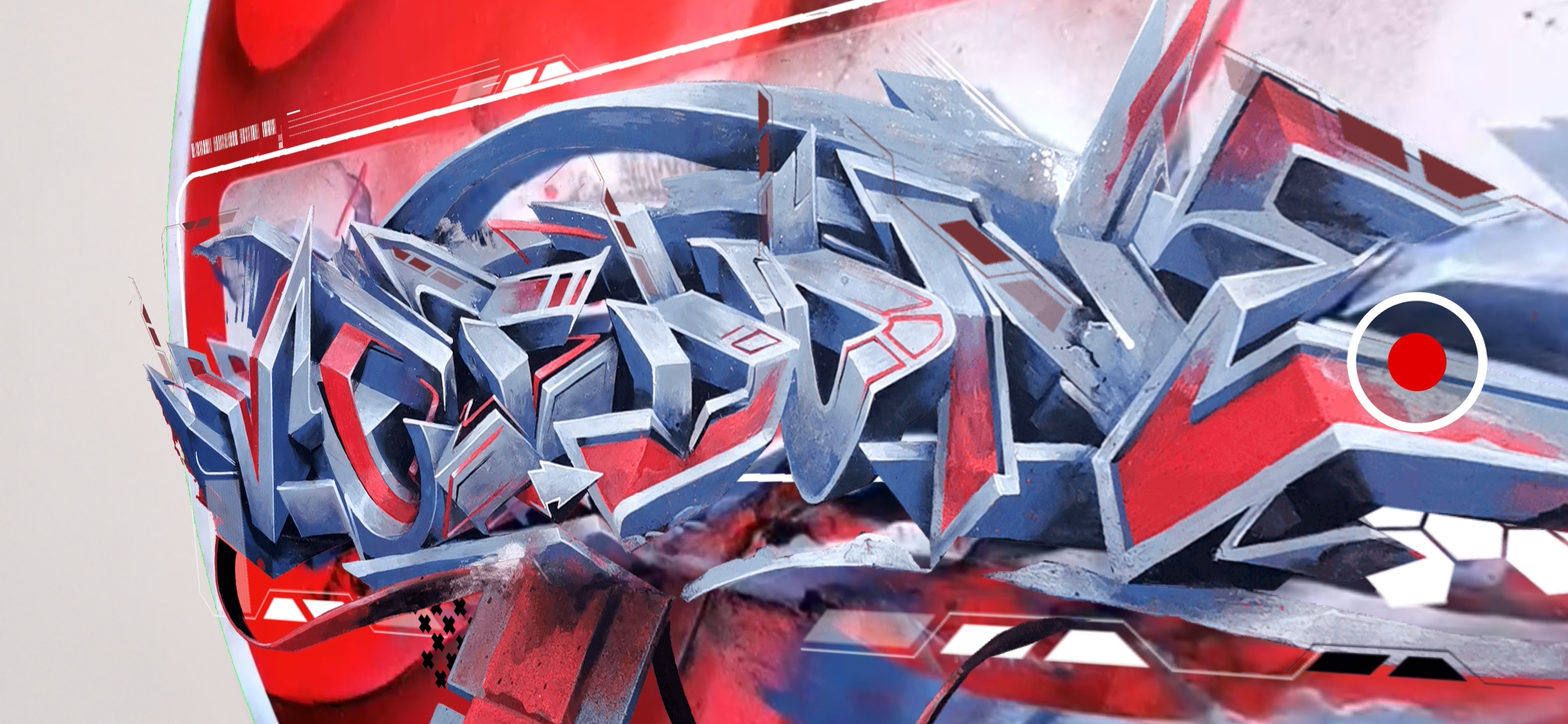
I’ve been designing a series of street signs for a collection, the idea being I will have all of the signs augmented, turned into stickers, then taken back to the streets with a few full size replicas. To date I have produced four signs which can be seen below, I’ll be selecting the best ones along the way to be programmed and attempting to incorporate more tricks as I understand the applications for this technology more.
This piece is the first I’ve produced that has controls! You can tap the screen to tag the piece with SFX, plus launch reactive animation and music by tapping a play button. The video above is still one of the early tests, but this print and the final patch are now live. Check in store now to grab my first interactive print and explore for yourselves!
There’s still lots more work to do for this project, but I’ve now taken the programming out of the lab and straight on to the streets with my first large scale interactive walls. I feel like a bit of a mad scientist having to constantly move between testing to real world application.
Stickers and prints are available from the STORE.
You can follow more of this progress -> here.
Void One_
 Void One // UK